
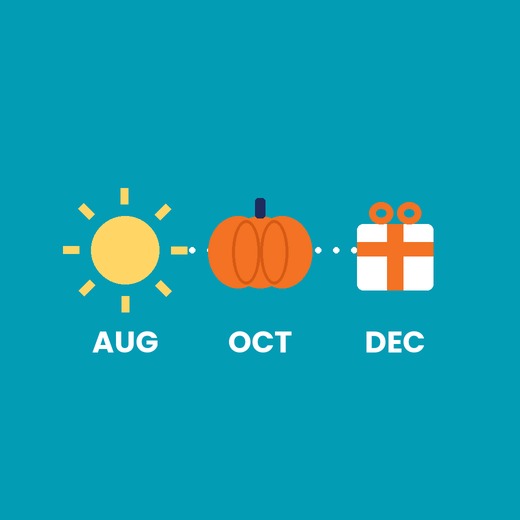
Christmas conversations are just starting, and most people already know December will be expensive. It's expected, and in one way or another most of us plan for it. What's less talked about is how much the months before Christmas have changed in recent years.
The months before Christmas have changed
There's been a gradual creep. Halloween used to be a small occasion in the UK, but it has grown into a full event, with costumes, decorations, parties and sweets for the door. Black Friday has gone from a single day of deals to weeks of sales and countdowns, much of it designed to encourage spending ahead of Christmas. Add these to everything else in the autumn and the pressure no longer starts in December. It starts with the summer holidays and carries on right through to the new year.
Over the years I've seen this pattern become more and more familiar. The summer holidays bring days out, travel and extra childcare, and before there's really time to recover, September arrives with school uniform, shoes and new activities. Then come half term, Halloween, bonfire night, birthdays and Black Friday, while the heating goes back on and the evenings draw in. None of it is unexpected, but because these costs only come round once a year, they're rarely built into a monthly budget.
How spending becomes a habit
What I find most important is the effect all of this has on habits. Each occasion comes with its own reason to spend, and each decision feels perfectly reasonable at the time. But over four or five months, spending more slowly becomes the norm. It isn't a conscious choice. It simply becomes part of everyday life, and by January it can feel hard to know where the money has gone or how to get back on track.
That's why the new year can feel so difficult. Cutting back in January isn't just about tightening up for a few weeks. It means changing habits that have been building since the summer, and that rarely happens through willpower alone.
Planning ahead
The good news is that it's very manageable with a bit of planning. Looking at the year as a whole, rather than month by month, makes a real difference. So does putting a figure on the autumn as well as Christmas, setting money aside for it gradually, and recognising the moments when spending is most likely to creep up.
This is a big part of the work I do in Personal Finance Coaching, sometimes called money coaching. It's about understanding the habits behind spending and saving, seeing the full picture and putting a plan in place that fits around real life, with ongoing support to stick to it. I bring my knowledge as a qualified IFA and my experience of financial planning into coaching, so savings, pensions and protection are looked at as part of that wider picture, alongside the day-to-day.
Coaching itself is guidance and education rather than regulated financial advice, and I don't recommend or sell products. Sessions take place online via Zoom or Teams, anywhere in the UK, and always start with a free 10-minute discovery call. A Power Hour (£99) can be a good way to get a plan in place ahead of Christmas and the new year.
For anyone already struggling with debt, free and confidential advice is available from MoneyHelper, Citizens Advice and StepChange.
See the coaching options, or read What is personal finance coaching? and How much does a money coach cost in the UK?
General information, not advice. Personal finance coaching is provided by Money Saviour Financial Solutions Ltd and is not regulated by the FCA. Debt advice is provided by Money Saviour C.I.C. through commissioning organisations only.